The atmosphere across the American heartland and the Great Lakes region remains heavy with grief as communities begin the harrowing task of searching through the skeletal remains of what were once thriving neighborhoods. Over the past several days, a relentless and violent weather system has carved a path of destruction through Oklahoma and Michigan, leaving a grim toll of at least eight confirmed fatalities and a trail of shattered lives. The sheer scale of the ruins has left even veteran emergency responders stunned, as they navigate debris fields that stretch for miles, marking one of the most volatile early-season meteorological…
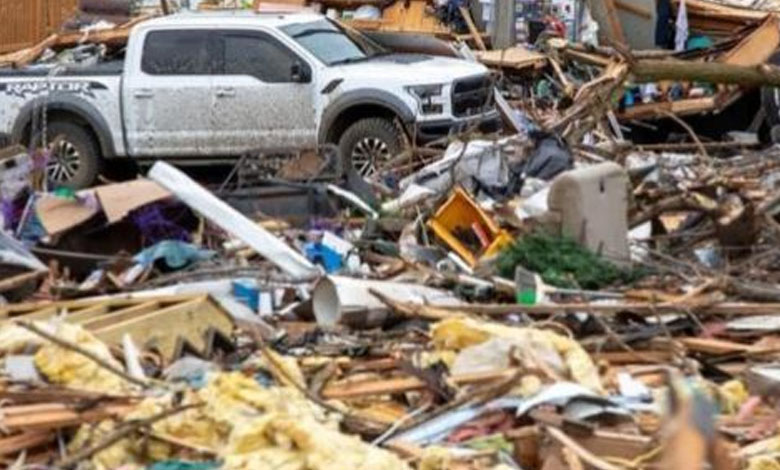
The atmosphere across the American heartland and the Great Lakes region remains heavy with grief as communities begin the harrowing task of searching through the skeletal remains of what were once thriving neighborhoods. Over the past several days, a relentless and violent weather system has carved a path of destruction through Oklahoma and Michigan, leaving a grim toll of at least eight confirmed fatalities and a trail of shattered lives. The sheer scale of the ruins has left even veteran emergency responders stunned, as they navigate debris fields that stretch for miles, marking one of the most volatile early-season meteorological events in recent memory.
In southern Michigan, the scene is particularly surreal. On Saturday morning, the sound of chainsaws and heavy machinery replaced the roar of the wind as authorities and local volunteers sifted through piles of splintered timber, twisted metal, and personal belongings scattered across the muddy landscape. For many residents, the disaster felt like an impossibility. Michigan has long been considered a relatively safe harbor from the most violent whims of nature, sitting well outside the boundaries of the traditional Tornado Alley. While states like Texas and Kansas are accustomed to the seasonal dread of sirens and storm cellars—averaging 155 and 96 tornadoes per year, respectively—Michigan typically sees a modest average of only 15. This statistical rarity meant that when the sky turned an bruised shade of green on Friday, many were caught off guard by a level of ferocity they had only ever seen on the evening news from distant states.
The unexpected nature of the Michigan strikes amplified the tragedy. Neighborhoods that had stood for generations were reduced to matchsticks in a matter of seconds. In these communities, the concept of a tornado is often an abstract threat, something that happens elsewhere. The reality of Friday’s storms shattered that complacency. Eyewitness accounts describe a low, guttural roar—often compared to the sound of a freight train—that signaled the arrival of the vortex. For those in the direct path, there was little time to do more than huddle in interior hallways or basements, praying that the structures above them would hold. Many did not.
As the sun rose over the disaster zones, the full extent of the carnage became visible. In Oklahoma, where the residents are arguably more “storm-hardened,” the grief is no less profound. The state has a long, painful history with high-end tornadic activity, yet the specific cruelty of this latest system has left even the most resilient survivors reeling. The fatalities in Oklahoma underscore the fact that no amount of preparation can fully mitigate the power of an EF-4 or EF-5 tornado. When the earth itself seems to rise up, the boundary between safety and catastrophe becomes paper-thin.
The search and recovery efforts are currently a race against time and the elements. First responders are utilizing thermal imaging, K-9 units, and drones to scan the wreckage for signs of life. Every downed power line and ruptured gas main adds a layer of peril to an already dangerous environment. For the families of the missing, the silence is the hardest part. In the aftermath of such a storm, the familiar landmarks of a neighborhood vanish. Streets are blocked by fallen century-old oaks, and houses are stripped down to their concrete slabs, making it difficult for even lifelong residents to orient themselves in the ruins.
Beyond the immediate physical destruction lies a complex web of logistical and emotional challenges. The displacement of hundreds of families has triggered an immediate need for emergency housing, clean water, and medical supplies. Local gymnasiums and community centers have been converted into makeshift shelters, where neighbors lean on one another for support. The psychological trauma of losing a home in an instant—seeing decades of memories reduced to a heap of insulation and broken glass—is a burden that will require years of counseling and community solidarity to heal.
This disaster also raises pressing questions about the shifting nature of severe weather in the United States. Meteorologists are closely examining the atmospheric conditions that allowed such a powerful system to manifest so far north and with such sudden intensity. The traditional boundaries of “Tornado Alley” appear to be expanding or shifting, bringing the threat of extreme wind events to regions that lack the specialized infrastructure, like universal storm cellars or reinforced public shelters, common in the deep South and the Plains. Friday’s events in Michigan serve as a sobering wake-up call that the historical playbook for disaster preparedness may no longer be sufficient in an era of increasingly unpredictable climate patterns.
As the national Guard arrives to assist with debris removal and security, the stories of survival and heroism are beginning to emerge. There are accounts of parents shielding children with their own bodies, neighbors dragging one another from collapsed crawlspaces, and strangers driving hours to deliver food and supplies to the affected areas. These acts of grace provide a necessary counter-narrative to the devastation, highlighting the enduring strength of the human spirit when faced with the inexplicable power of nature.
The economic impact on these regions will be staggering. While insurance adjusters are already on the ground, the process of rebuilding an entire neighborhood from scratch is a monumental undertaking. For small-town Michigan and the rural outskirts of Oklahoma, the loss of local businesses and infrastructure could lead to long-term demographic shifts if residents choose not to return. The path to recovery is not merely about clearing rubble and pouring new foundations; it is about restoring the sense of safety and permanence that a home is supposed to provide.
In the coming weeks, as the national news cameras move on to the next headline, the people of Michigan and Oklahoma will remain in the trenches of recovery. The eight lives lost will be memorialized, and the lessons learned from this rare meteorological event will be integrated into future safety protocols. For now, however, the focus remains on the immediate: finding the missing, comforting the bereaved, and beginning the slow, painful process of picking up the pieces. The tragedy of March 2026 will be etched into the history of these states, a reminder of the day the wind turned into a weapon and changed the landscape of the heartland forever.