The geopolitical landscape of March 2026 has been set ablaze by a series of high-stakes military maneuvers that have not only altered the map of the Middle East but have also ignited a civil war within the American conservative movement. Following the massive U.S.-Israeli coordinated strikes on February 28, which targeted command centers in Tehran, the initial shock of the operation has given way to a fierce domestic debate. While President Donald Trump hails the mission as a historic triumph that has neutralized decades of threats, the populist wing of his own base—led by figures like Tucker Carlson—has responded with…
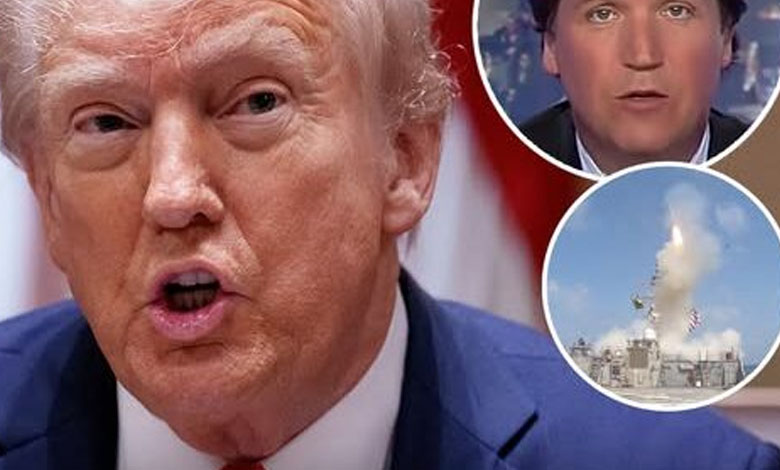
The geopolitical landscape of March 2026 has been set ablaze by a series of high-stakes military maneuvers that have not only altered the map of the Middle East but have also ignited a civil war within the American conservative movement. Following the massive U.S.-Israeli coordinated strikes on February 28, which targeted command centers in Tehran, the initial shock of the operation has given way to a fierce domestic debate. While President Donald Trump hails the mission as a historic triumph that has neutralized decades of threats, the populist wing of his own base—led by figures like Tucker Carlson—has responded with a level of vitriol that suggests a permanent rupture in the MAGA coalition.
The Strike: A Decapitation of Leadership
The technical success of the operation, at least from the perspective of the White House, is unprecedented. In an interview with Fox News shortly after the strikes, President Trump exuded his characteristic bravado, describing the elimination of 48 high-ranking Iranian leaders, including the reported death of Supreme Leader Ayatollah Ali Khamenei. “Nobody can believe the success we’re having,” the President stated, framing the operation as the definitive end to a 47-year-old stalemate. For Trump, the logic is clear: an Iran on the precipice of nuclear capability and long-range missile dominance was an existential threat that required a final, decisive blow.
However, the cost of this “success” was immediately apparent. U.S. Central Command (CENTCOM) confirmed that the opening phases of the operation resulted in the deaths of three American service members, with five others sustaining serious injuries. Iran’s response was swift and chaotic, launching a barrage of drone and missile strikes at U.S. military installations across the Gulf. Bases in Bahrain, Qatar, and the outskirts of Dubai became front-line targets, marking the most direct and violent confrontation between Washington and Tehran in modern history.
The Carlson Condemnation: “Disgusting and Evil”
While the President’s traditional allies in Congress rallied around the flag, the most influential voice in populist media, Tucker Carlson, took a hammer to the administration’s narrative. In a searing interview with Jon Karl, Carlson did not mince words, using two brutal descriptors to categorize the strikes: “absolutely disgusting and evil.”
Carlson, who has long advocated for an “America First” foreign policy that prioritizes non-interventionism, revealed that he had personally met with Trump in the days leading up to the attack to urge restraint. For Carlson, the decision to strike Tehran was not an act of strength, but a betrayal of the movement’s promise to end “forever wars.” His condemnation marks a significant turning point; by using the word “evil,” he has moved the critique from a mere policy disagreement to a moral indictment of the President’s judgment.
A Coalition in Crisis: The Conservative Backlash
The rift created by Carlson has provided a platform for other prominent conservatives to voice their dissent. Former congresswoman Marjorie Taylor Greene, usually a staunch Trump loyalist, expressed her disillusionment with what she described as another “pointless foreign war.” Her critique touched on a generational wound, noting that thousands of Americans have already been sacrificed in Middle Eastern conflicts. “We said no more,” Greene remarked, dismissing the administration’s claim that the U.S. is “freeing the Iranian people” as a hollow justification for intervention.
This sentiment was echoed by Senator Rand Paul, who focused his opposition on the constitutional erosion of war powers. Paul argued that the Executive Branch has once again bypassed Congress, violating the oath of office to the Constitution in favor of a “Presidential war.” He emphasized that the power to initiate war was conferred to Congress specifically to make such catastrophic events less likely. Meanwhile, cultural commentator Matt Walsh joined the fray, asserting that the internal political future of Iran is not the responsibility of the American taxpayer. “If a single American life is lost in the service of that goal,” Walsh warned, “it will be a travesty.”
Strategic Objectives vs. Ideological Fractures
Despite the internal backlash, President Trump has shown no signs of de-escalation. He has issued a chilling ultimatum to Iranian security forces: “lay down your arms and receive full immunity or face certain death.” The administration’s stated goal is the total neutralization of Iran’s nuclear and missile infrastructure, including the hardened facilities at Fordow, Natanz, and Isfahan. Trump’s supporters argue that the decapitation of the Iranian leadership was the only way to prevent a nuclear-armed rogue state from threatening the American homeland.
Yet, the strategic success of the strikes remains overshadowed by the ideological fractures at home. The conservative movement is now split into two distinct camps. On one side are the traditional hawks who view aggressive national security measures as the primary duty of the Commander-in-Chief. On the other side is the burgeoning “restraint” movement—led by Carlson and Paul—which views these interventions as a drain on national resources and a violation of the constitutional order.
The 2026 Fallout: A Redefined Movement
As military operations continue under the banner of “Operation Epic Fury,” the domestic political fallout is becoming the story of the year. The USS Abraham Lincoln is reportedly under threat, oil prices are fluctuating wildly, and the American public is once again grappling with the reality of combat deaths in a distant land. The “Daily Positive” news cycles of 2025 have been replaced by a somber 2026 reality of air-raid sirens in the Gulf and heated debates in Washington.
The political trajectory for Donald Trump is now uncertain. While he has achieved a tactical military goal that eluded his predecessors for nearly half a century, he has done so at the cost of his movement’s unity. The “disgusting and evil” label applied by Tucker Carlson is likely to haunt the 2026 mid-term cycle, as populist voters are forced to choose between their loyalty to the man and their commitment to his original anti-interventionist platform.
The confrontation in the Gulf may eventually settle into a new status quo, but the conservative movement will never be the same. The “America First” doctrine has been put to its ultimate test, and the results have revealed a fundamental disagreement over what it truly means to put America first. As the embers of Tehran continue to smolder, the real battle is just beginning in the hearts and minds of the American people, as they decide whether the price of “decapitation” was worth the cost of a fractured nation.