The Wedding Night Confession That Changed Everything:
What My New Husband Finally Told Me About the Night My First Husband Died

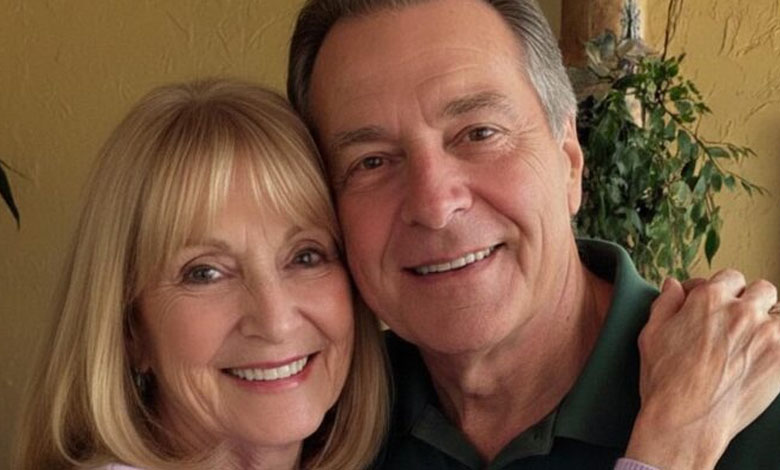
My name is Eleanor. I’m seventy-one years old, and I thought I understood grief. I thought I knew what it meant to lose someone you love and slowly learn to live again.
But on my wedding night—marrying my late husband’s closest friend two years after losing the love of my life—I discovered that sometimes the hardest truths are the ones people keep from you out of love.
Charles looked at me through tears that evening and said words that made my heart stop: “You deserve to know the truth. I can’t keep it from you anymore.”
What he confessed changed everything I thought I understood about the night my husband died.
Two years earlier, my husband Conan was killed in a car accident on Route 7. A drunk driver struck his vehicle and fled the scene. Conan didn’t survive long enough for the ambulance to arrive.
The grief that followed was the kind that suffocates you. It steals your appetite, your sleep, your sense of time passing. I would wake up in the morning reaching across the bed for him, forgetting for those first terrible seconds that he was gone. Then reality would crash back in and I’d have to remember all over again.
Charles was the one who held me together during those impossible early days.
He arranged the funeral when I couldn’t form coherent thoughts. He came by the house daily for weeks afterward. He cooked meals I barely touched. He sat with me in silence when words felt too heavy to speak. He never pushed, never overstepped, never expected anything in return.
He was just steady. Dependable. Like something solid keeping me upright when everything else had collapsed.
The months turned into a year. Slowly, painfully, I began to breathe again.
Charles continued to visit regularly. We’d sit on the porch with coffee, sharing memories of Conan. One afternoon, he told a story about a fishing trip they’d taken together, and he made me laugh. I don’t even remember what the story was about—I just remember the shock of realizing I could still feel joy.
Then one day Charles arrived with a small bouquet of daisies.
“These made me think of you,” he said simply, handing them over with a shy smile.
I invited him inside. We talked for hours that afternoon—about growing older, about loneliness, about what life might still hold for people in their seventies who’d already experienced so much loss.
One evening he arrived looking nervous, something hidden in his jacket pocket.
“Ellie,” he said, using the nickname Conan had always called me, “may I ask you something important?”
“Of course, Charles. You can ask me anything.”
He pulled out a small velvet box and opened it to reveal a simple gold ring.
“I know we’re not young anymore,” he said softly, his voice trembling slightly. “But would you consider marrying me? Would you give an old man the honor of spending whatever time we have left together?”
I was completely stunned. I hadn’t expected this, hadn’t even considered the possibility.
He hurried to add, “You don’t have to answer right now. I just needed you to know that being with you makes life feel meaningful again. After losing Conan, I thought I’d lost my purpose. But you’ve given me something to live for.”
I looked at this man who had helped me survive my darkest days. Who had been patient and kind and never asked for anything in return. Who made me feel less alone in a world that had become frighteningly empty.
After two days of careful reflection, I said yes.
Our children and grandchildren were absolutely delighted when we told them.
“Grandpa Charles!” my grandchildren cheered, running to hug him. They’d known him their whole lives as “Uncle Charles,” Conan’s best friend who was always around for birthdays and holidays.
The Wedding Day That Should Have Been Perfect
The wedding itself was small and intimate, held in the garden behind my daughter’s house. Just family and a handful of close friends. I wore a cream-colored dress that my daughter helped me choose. Charles wore a beautifully tailored suit.
We smiled for photographs like we were young again, starting out on a new adventure together.
But during our first dance—a slow waltz to a song Charles had chosen—I noticed something that made my heart clench with concern.
His smile didn’t reach his eyes.
At seventy-one, you’ve lived long enough to recognize the difference between genuine joy and a carefully constructed mask. That smile Charles wore was a mask, hiding something darker underneath.
“Are you all right?” I whispered as we swayed together.
“I’m fine,” he said quickly. “Just happy.”
But he wasn’t happy. I could feel the tension in his body, see the strain around his eyes.
Something was wrong.
On the drive home to my house—our house now—Charles was unusually quiet. I tried to fill the silence with cheerful conversation.
“The ceremony was beautiful, wasn’t it?”
“Yes,” he replied, his voice flat.
“The children seemed so happy for us.”
“They were.”
“Charles, are you absolutely sure you’re okay? You seem distant.”
He tightened his grip on the steering wheel until his knuckles went white. “Just a headache. I’ll be fine once we get home.”
When we arrived, I discovered that my daughter had decorated our bedroom with roses and candles—a sweet gesture that would have been romantic under different circumstances.
“How lovely,” I said, trying to recapture some of the joy that should have filled this evening.
Charles said nothing. He walked straight into the bathroom and closed the door.
I changed into my nightgown and sat on the edge of the bed, waiting. I could hear water running. Then I heard something else that made my blood run cold.
Quiet sobbing.
Charles was crying.
“Charles?” I called gently, walking to the bathroom door. “Sweetheart, what’s wrong?”
“I’m fine,” he replied, but his voice was thick with tears and trembling with emotion.
“You’re clearly not fine. Please talk to me.”
“Just give me a minute,” he said.
I waited, my concern growing with each passing second.
Eventually he came out. His eyes were swollen and red from crying. He looked like a man carrying the weight of the world on his shoulders.
He sat down on the edge of the bed, staring at the floor, his hands clasped tightly together.
“You need to know the truth,” he said finally, his voice barely above a whisper. “I can’t hide it from you anymore. It’s not fair to you.”
My heart began to pound. “What truth, Charles? You’re scaring me.”
“I don’t deserve you, Ellie. I’m not the man you think I am.”
“Charles, what are you talking about?”
He took a shaky breath. “Do you remember the night Conan died?”
The question hit me like a physical blow. “Of course I remember. How could I ever forget?”
“I’m connected to what happened that night,” he said, still not looking at me.
The room seemed to tilt sideways. “What do you mean you’re connected to it?”
“That night… Conan was on his way to see me when the accident happened. I called him. I told him I needed him urgently, that it was an emergency and I needed his help right away.”
A chill ran through my entire body.
“Why? What was the emergency?”
He looked away, unable to meet my eyes. “The specific reason doesn’t matter now. What matters is that I called him. He was driving to help me when it happened.”
“And that’s when the drunk driver hit him,” I whispered, the pieces falling into terrible place.
“Yes. If I hadn’t called him that night, he wouldn’t have been on that road. He wouldn’t have been in that specific place at that specific moment. Don’t you see, Eleanor? It’s my fault. I killed my best friend.”
I stared at him, trying to process what he was telling me.
“What was the emergency, Charles? What was so urgent that you needed him to come right away?”
He shook his head firmly. “It doesn’t matter anymore. The point is that he’s gone because of me. Because I was selfish and weak and I called him when I should have handled it myself.”
Something about his explanation felt… incomplete. Smoothed over, like he’d sanded down the roughest edges of the truth and was only showing me the parts he wanted me to see.
But he was crying so hard, shaking with such obvious guilt and pain, that I pushed my questions aside.
“Charles,” I said softly, taking his hands in mine, “it wasn’t your fault. A drunk driver made the choice to get behind the wheel. That person is responsible for what happened, not you.”
“But if I hadn’t called him—”
“You needed your best friend, and he came to help you. That’s what friends do. That’s what people who love each other do. You didn’t cause the accident. You didn’t make that driver drink. You didn’t put Conan in danger intentionally.”
He pulled me into his arms, his whole body trembling with the force of his emotions.
But even as I held him and stroked his back and murmured comforting words, I couldn’t shake the feeling that there was more to this story. Something he still wasn’t telling me.
Something important that he was keeping hidden…
The days following our wedding felt different in a way I couldn’t quite define. Charles seemed lighter somehow, as if finally confessing about that phone call—about feeling responsible for Conan’s death—had lifted a burden he’d been carrying for two years.
But I began noticing other things. Small details that didn’t quite add up.
Charles started taking long walks, sometimes disappearing for hours at a time. When he returned, he looked exhausted—pale and worn out in a way that seemed excessive for a simple walk around the neighborhood.
“Are you feeling all right?” I’d ask with growing concern.
He’d smile faintly. “Just feeling my age, I suppose. These old bones don’t move like they used to.”
I didn’t believe him, but I didn’t push. Not yet.
One evening when he came home from one of these mysterious outings, I wrapped my arms around him in greeting—and caught the sharp, unmistakable scent of antiseptic.
“Have you been at a hospital?” I asked, pulling back to look at his face.
He stepped away too quickly, his expression guarded. “No. Why would you think that?”
“You smell like medical disinfectant. Like the smell that clings to your clothes after you’ve been in a doctor’s office or hospital.”
“Oh… that,” he said, the words coming out too fast. “I just dropped off some paperwork for a friend. Nothing important. Just helping out with some medical forms.”
He kissed my forehead quickly and headed straight for the shower.
I stood in the hallway, a sick feeling growing in my stomach. He was lying to me. I was absolutely certain of it. The question was why.
What was he hiding now?
That was the moment I decided I needed to find out the truth, whatever it might be.
Following My Husband
The next afternoon, Charles announced he was heading out for another walk.
“I’ll be back in about an hour,” he said, pulling on his jacket.
I gave him five minutes’ head start, then grabbed my own coat and followed him.
I may be seventy-one years old, but I can still move quietly when I need to. I kept a safe distance as Charles turned off the main road—and then I watched him walk directly into Regional Medical Center.
My pulse began to race. Why would he lie about going to a hospital?
After giving him a few minutes to get inside, I followed. The lobby was busy enough that I could blend in easily, just another elderly person visiting the medical center.
I heard Charles’s voice coming from down a hallway and traced it to a consultation room. The door wasn’t fully closed. I positioned myself just outside where I could hear without being seen.
“I don’t want to die,” Charles was saying, his voice thick with emotion. “Not now. Not when I finally have something real to live for.”
A doctor’s calm voice responded, “The surgery is your best option at this point, Charles. But it needs to happen soon. Your heart can’t sustain this level of damage much longer.”
My breath caught in my throat.
His heart?
“How much time do I have?” Charles asked. “If I don’t have the surgery, I mean.”
“Months, perhaps a year at most. But with the surgery and proper follow-up care, you could have many more years. Good years.”
I couldn’t stay hidden any longer. I pushed the door open.
Charles looked up, and all the color drained from his face. “Eleanor?”
I stepped inside, my legs feeling unsteady. “What’s happening? What’s wrong with your heart?”
The doctor glanced between us. “Are you family?”
“I’m his wife,” I said firmly.
Charles stood up slowly, looking like he might collapse. “Ellie, I can explain. Please, just let me explain.”
“Then do it,” I said, my voice sharper than I intended. “Explain why you’ve been lying to me. Explain why you’re at a hospital discussing heart surgery when you told me you were taking a walk.”
Charles asked the doctor for privacy. Once we were alone in the small consultation room, he slumped back into his chair, all the energy seeming to drain out of him.
“Your heart is failing,” I said quietly, needing to say it out loud to make it real.
“Yes.”
“How long have you known?”
He stared down at his hands, those familiar hands I’d held just days ago when we exchanged wedding vows. “Two years.”
“Two years?” My voice shook with shock and anger. “Since when exactly?”
“Since the night Conan died,” he admitted, tears beginning to spill down his cheeks. “That’s when the damage to my heart began. I was diagnosed with the condition not long after. I’ve been managing it with medication, trying to hide how serious it’s become.”
Suddenly, everything fell into terrible, perfect place. All the pieces I’d been missing clicked together.
“That’s why you called Conan that night,” I said slowly. “You weren’t having some vague emergency. You were having a heart episode.”
He nodded, unable to speak.
“Tell me exactly what happened,” I said, sitting down beside him. “No more half-truths. No more protecting me. Tell me everything.”
Charles took a shaky breath. “I was home alone. I started having chest pains—severe ones. I couldn’t breathe properly. I was terrified. I called Conan and told him I thought I was having a heart attack. I asked him to come get me and take me to the hospital.”
“And he rushed to help you.”
“Yes. He was on his way to my house when the drunk driver hit him. Meanwhile, a neighbor heard me calling out and dialed 911. An ambulance came and took me to the hospital. I barely remember the ride. When I woke up several hours later in a hospital bed, the first thing I asked about was Conan. That’s when they told me he’d been killed in an accident.”
“Oh, Charles,” I whispered.
“I killed him,” Charles said, his voice breaking. “If I hadn’t called him, if I’d just called an ambulance myself instead of reaching out to my best friend, he’d still be alive. You’d still have your husband. Your children would still have their father.”
“You didn’t kill him,” I said firmly. “A drunk driver killed him. You were having a medical emergency and you reached out for help. That’s not a crime. That’s not something you should feel guilty about.”
“How can I not feel guilty?” he asked. “Every single day for two years I’ve carried this. Knowing that he died trying to save me.”
“Why didn’t you tell me any of this?” I asked. “Why keep it secret all this time?”
He looked at me with such pain in his eyes. “Because I couldn’t bear the thought of you grieving again—this time anticipating my death. I stayed close to help you heal from losing Conan. And somewhere along the way, I fell in love with you. But I was falling in love while knowing my own heart was failing, knowing I might not have much time left.”
“Why didn’t you tell me before we got married?” I asked, my voice gentle despite the hurt I felt.
“Because I didn’t want you choosing me out of sympathy,” he said. “I didn’t want you to marry me because you felt sorry for me or because you thought I was dying and deserved some happiness before the end. I wanted you to choose me because you loved me. Because I made your life better, not because you were trying to make my death easier.”
The truth of his words hit me hard. He hadn’t married me expecting to die soon. He’d married me hoping desperately to live—just quietly terrified that he might not get that chance.
I took his hands in mine and squeezed them tightly. “I didn’t marry you out of pity, Charles. I married you because you make me laugh. Because you understand my grief without trying to fix it. Because when I’m with you, life feels less lonely. Because I love you.”
He looked at me like I’d just given him the most precious gift imaginable.
“The doctors thought I had more time,” he said. “When they first diagnosed the condition, they said with medication I could manage it for years. I believed them. I truly thought I’d have time to live this new life with you. But the damage has progressed faster than anyone expected.”
“You’re not leaving me,” I said with fierce determination. “Not like this. Not when we’ve just started. You’re having that surgery.”
“Eleanor, it’s risky. At my age—”
“I don’t care about the risks,” I interrupted. “The alternative is watching you die. And I’m not doing that. Not when there’s a chance to save you. We’re fighting this together.”
He pulled me into his arms and wept against my shoulder like a child.
“I don’t deserve you,” he whispered.
“Well,” I said softly, stroking his back, “you’re stuck with me now. For better or worse, remember? We just said those vows a few days ago.”
Fighting For More Time
In the weeks that followed, I threw myself into preparing Charles for the surgery with the same fierce determination I’d once used to raise my children and build my life with Conan.
I researched his heart condition, reading medical journals and asking the doctors detailed questions until I understood exactly what was wrong and what the surgery would fix. I made sure Charles followed every pre-surgical instruction to the letter—proper diet, necessary medications, adequate rest.
Our children and grandchildren came to visit when we told them about Charles’s condition. They were frightened, but they rallied around us with love and support.
My granddaughter Emma, who was ten years old, held Charles’s hand and said with absolute certainty, “You have to get better, Grandpa Charles. You promised to teach me how to play chess, remember?”
Charles smiled at her through tears. “I remember, sweetheart. And I will. That’s a promise I intend to keep.”
On the morning of the surgery, I rode with Charles to the hospital and held his hand right up until they wheeled him through those terrible double doors into the operating room.
Then I sat in the surgical waiting room for six hours, watching the clock and praying to a God I wasn’t sure I still believed in.
Every minute felt like an eternity. Every time a door opened, my heart would jump, hoping for news.
Finally, the surgeon came out, still in his scrubs. I stood up so quickly I nearly knocked over my chair.
“The surgery went very well,” he said with a tired smile. “We were able to repair the damage. He’s stable and in recovery now.”
I burst into tears—tears of relief and joy and exhaustion all mixed together.
Two months later, on a beautiful spring morning, Charles and I visited Conan’s grave together.
We brought daisies—Conan’s favorite flower. I knelt down and placed them carefully on the headstone, running my fingers over his name carved in the granite.
“I miss you,” I whispered. “Every single day, I miss you. But I’m okay now. I’m happy. And I think you’d be glad about that. I think you’d be happy that Charles and I found each other.”
Charles stood beside me, his recovering heart beating strong and steady, his hand warm in mine.
Love doesn’t replace what you’ve lost, I realized in that moment. It doesn’t erase the grief or make the person who died any less important.
But love can carry that loss forward. It can honor what was while still making room for what is.
And sometimes, that’s the greatest gift grief can give you—the wisdom to know that loving again doesn’t mean forgetting. It means choosing to keep living.