The geopolitical landscape of the Middle East has long been defined by a complex balance of power, but in recent years, the shadow of Iran’s military evolution has lengthened significantly. Deep beneath the rugged, arid terrain of the Iranian plateau, a secret has been meticulously constructed—one that is currently fueling intense strategic debate in Western capitals. Reports detailing massive facilities situated 500 meters underground reveal the existence of what Iranian officials call “missile cities.” These are not merely storage depots; they are fully integrated, subterranean military complexes designed to protect, maintain, and launch a sophisticated arsenal that has made Tehran…
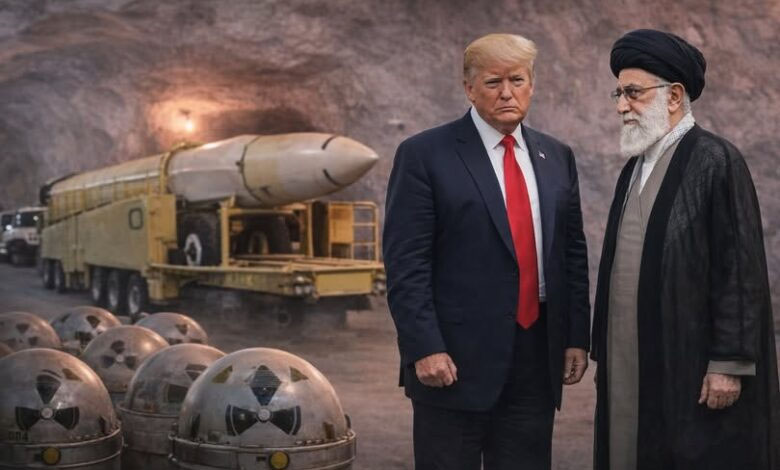
The geopolitical landscape of the Middle East has long been defined by a complex balance of power, but in recent years, the shadow of Iran’s military evolution has lengthened significantly. Deep beneath the rugged, arid terrain of the Iranian plateau, a secret has been meticulously constructed—one that is currently fueling intense strategic debate in Western capitals. Reports detailing massive facilities situated 500 meters underground reveal the existence of what Iranian officials call “missile cities.” These are not merely storage depots; they are fully integrated, subterranean military complexes designed to protect, maintain, and launch a sophisticated arsenal that has made Tehran the preeminent missile power in the region.
According to data curated by the United States Central Command, Iran’s ballistic missile capacity is staggering, with estimates suggesting a stockpile exceeding 3,000 projectiles of various classes. This diverse arsenal represents decades of domestic engineering and the successful reverse-engineering of foreign technologies, resulting in a multi-tiered deterrent strategy that can reach across the Levant and deep into Europe. The sheer volume of this hardware, coupled with the hardened nature of its storage, suggests a military doctrine centered on survivability and the ability to strike back even after sustaining a significant aerial bombardment.
At the foundation of this strategy are short-range ballistic missiles, specifically the Fateh and Zolfaghar families. These systems are designed for surgical strikes against military targets near Iran’s borders. Their primary tactical value lies in their ability to be deployed in “saturation strikes”—multiple, simultaneous launches designed to overwhelm the radar arrays and interceptor capacities of modern air defense systems. This specific tactic was demonstrated with clinical precision in 2020, following the assassination of General Qassem Soleimani, when a coordinated volley of missiles struck U.S. military positions in Iraq. It was a clear signal to the world that Tehran possessed the technical coordination to execute rapid, high-impact operations.
However, the “strategic backbone” of Iran’s deterrent consists of its medium-range ballistic missiles (MRBMs). Models such as the Shahab-3, the Khorramshahr, and the Sejjil represent the peak of Iranian strategic engineering, with operational ranges of approximately 2,000 kilometers. While Tehran officially maintains that this range is the current limit of its ambitions, Western intelligence analysts remain skeptical. Experts suggest that the propulsion technologies and staging capabilities developed for these missiles could, with minor modifications, be adapted for much longer ranges. This potential for “range extension” is a central point of concern for European nations, as it theoretically places much of the continent within Tehran’s reach.
Beyond traditional ballistics, the emergence of hypersonic technology has added a new, destabilizing layer to the regional security equation. The Fattah-2 hypersonic missile is perhaps the most discussed project within the Iranian defense establishment. Authorities claim this weapon is capable of maneuvering at extreme velocities, allowing it to bypass current missile defense shields that rely on predictable ballistic trajectories. If these claims are accurate, the Fattah-2 represents a significant leap in technology regarding modern counter-interception techniques. This shift toward maneuverable, high-speed weaponry forces a total reassessment of how defense systems like the Patriot must be configured to protect high-value assets.
The Iranian “deterrence mosaic” is further complicated by the proliferation of cruise missiles and loitering munitions. Cruise missiles like the Soumar, believed to be influenced by Russian Kh-55 designs, fly at low altitudes to hug the terrain, making them exceptionally difficult for traditional radar to track. Simultaneously, the rise of the Shahed-136 “kamikaze” drone has revolutionized low-cost warfare. These drones are relatively inexpensive to produce but can be deployed in massive swarms. In a historic shift in tactical economics, a swarm of drones costing a few thousand dollars can effectively neutralize or deplete an air defense battery where each interceptor missile costs millions.
The physical manifestation of this military might is found in the “missile cities” carved into the bedrock. Satellite imagery and state-released propaganda reveal miles of reinforced tunnels, vast underground depots, and specialized launch pads capable of elevating a missile from the depths to the surface in minutes. These facilities are designed to be absolute in their protection, intended to withstand even the most powerful conventional “bunker-buster” munitions. By burying their strategic assets 500 meters underground, the Iranian military has ensured that any attempt to neutralize their arsenal from the air would be an incredibly complex and potentially futile undertaking.
Despite Israeli reports suggesting that Iran’s missile stocks were depleted during the intense military clashes of the previous year, current expert assessments suggest a remarkably rapid recovery. Through a combination of distributed manufacturing and a robust supply chain for dual-use components, Tehran has managed to replace much of its lost inventory in a timeframe that has surprised many observers. This industrial resilience is a core component of Iran’s long-term strategy, ensuring that their deterrence remains credible even after a major conflict.
In Washington, the light of truth regarding Iran’s intercontinental capabilities remains nuanced. Current U.S. intelligence suggests that while Iran’s regional reach is formidable, they do not yet possess a reliable intercontinental ballistic missile (ICBM) capable of striking the United States mainland. Most analysts estimate that such a capability is unlikely to be fully realized before 2035. However, the crossover between Iran’s burgeoning space program and its military missile development remains a subject of intense scrutiny, as the boosters used to launch satellites are often technically adjacent to those required for long-range weaponry.
As 2026 progresses, the world continues to watch the Iranian plateau with a mixture of concern and strategic curiosity. The secret buried 500 meters underground is no longer a total mystery, but its presence creates a new reality for international diplomacy. The warnings regarding this arsenal are not intended to incite panic but to foster a realistic understanding of the regional balance of power. As political and military systems in the Middle East continue to strain under the weight of historic tensions, the underground missile cities of Iran stand as a formidable, silent reminder of a nation that has placed its security—and its future—deep within the earth.
The ongoing debate regarding Iran’s missile program is not merely about numbers; it is about the evolution of modern warfare. From hypersonic gliders to kamikaze drones and deep-earth silos, the secret of the 500-meter-deep facilities is a clear indicator that the nature of deterrence has changed forever. In a world where the speed of digital commentary often outpaces the slow reality of military development, the subterranean activity in Iran remains a constant, looming variable in the quest for global stability.