The Man Brought Mistress To His Pregnant Wife’s Funeral — Then The Lawyer Opened Her Will And Uncovered

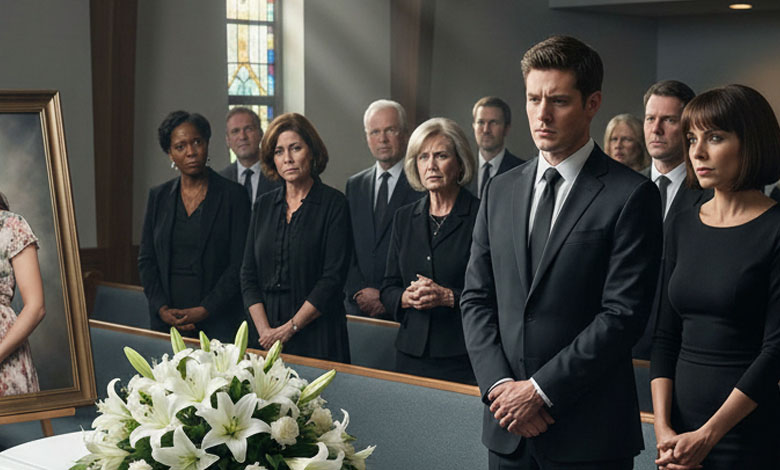
My name is Emily Carter, and there is one image that refuses to fade—the moment my brother-in-law walked into my sister’s funeral with another woman on his arm.
The church in our small Texas town smelled of white lilies and candle wax. Soft hymns floated through the air, mingling with quiet sobs. At the front sat Lily’s closed casket. She had been thirty-two weeks pregnant when she “fell” down the stairs.
That was Jason’s explanation.
A tragic accident.
I never believed it.
When the church doors opened and Jason stepped inside, conversation died instantly. He wore a black suit and an expression carefully arranged into grief. Beside him stood a tall brunette in a fitted black dress, her hand threaded confidently through his arm.
My mother inhaled sharply. “Is he serious?” she whispered.
“That’s Rachel,” I murmured. The name had appeared on Lily’s phone months earlier. “The coworker.”
Whispers rippled through the pews. Jason guided Rachel to the front row—Lily’s row—and sat down as if nothing about this was inappropriate.
My chest burned.
I half rose, ready to confront them, but my father’s hand closed around my wrist. “Not here, Em,” he said quietly. “Not during the service.”
The pastor spoke about Lily’s kindness, her laugh, and the baby boy she had already named Noah. I couldn’t stop staring at Jason. I couldn’t reconcile the man sitting calmly beside his mistress with the husband who claimed he lost everything in a single tragic fall.
As the final hymn ended, a man in a gray suit stepped forward.
“My name is Daniel Hayes,” he announced, his voice steady and clear. “I am Lily Reed’s attorney.”
Jason stiffened. “Now?” he snapped. “We’re doing this now?”
Mr. Hayes didn’t react. “Your wife left specific instructions. Her will is to be opened today—in front of her family.”
The air thickened.
“There is a personal statement she insisted be read aloud at her funeral.”
Every eye in the church locked onto him as he unfolded a single sheet of paper.
“This was written three weeks before her death,” he explained.
Jason shifted in his seat. Rachel’s fingers tightened around his sleeve.
Mr. Hayes began.
“If you are hearing this, I am no longer here. Jason, I know about Rachel. I’ve known far longer than you think.”
A gasp swept through the room. My mother covered her mouth.
“I tried to forgive you for our baby’s sake. But every lie chipped away at me. That is why I changed my will.”
Jason shot to his feet. “This is ridiculous. She didn’t write that.”
“Sit down, Mr. Reed,” Mr. Hayes said calmly.
He continued reading.
“To my husband, I leave nothing beyond what the law requires. You may keep your personal belongings and the vehicle in your name. You have already taken enough.”
Murmurs erupted.
“The remainder of my estate—including the house, savings, and life insurance—is to be placed in trust for our unborn son, Noah. If Noah does not survive, the trust will pass to my sister, Emily Carter.”
My breath caught. I hadn’t known.
Jason let out a bitter laugh. “Her sister? This is insane.”
“There is more,” Mr. Hayes said.
He reached into his briefcase and removed a sealed envelope.
“This was delivered to my office two days before Lily’s death. It was marked: ‘To be opened only if my death is ruled an accident.’”
The church went silent.
Mr. Hayes opened the envelope.
“If Jason claims I fell, please do not accept it without question. On March 5th, after I confronted him about Rachel, he grabbed my arm and told me, ‘If you destroy my life, I’ll destroy yours.’ I no longer felt safe in my own home.”
The words felt like ice in my veins.
“I installed a small security camera at the top of the stairs,” Mr. Hayes continued. “If something happens to me, my lawyer has instructions.”
He placed a flash drive on the table.
Two weeks later, we sat in a police station watching that footage.
The image was grainy but clear.
Lily stood at the top of the staircase, visibly pregnant, crying. Jason stood below her, shouting.
“You’re not leaving,” he yelled. “You’re not taking my son.”
“He’s not your possession,” Lily cried. “I’m done. I’m going to my parents.”
Jason stormed up the steps.
He grabbed her wrist.
She pulled away.
His arm swung.
She lost her balance.
We watched her fall.
The room dissolved into sobs. The detective paused the screen.
“This is not an accident,” he said quietly. “This is a case.”
Jason was arrested within days—manslaughter, domestic abuse, obstruction. The headlines called it a tragedy, but to us it was something far more personal: the confirmation of what we had felt all along.
At the arraignment, I wore Lily’s wedding ring on a chain around my neck. Jason shuffled in wearing shackles.
He glanced at me and whispered, “Tell them I didn’t mean it.”
I stood.
“You brought your mistress to my sister’s funeral,” I said. “You meant every part of it.”
He looked down.
Months later, the trust was finalized. There was no child to inherit it. Everything passed to me, exactly as Lily had written.
I moved into her house.
The staircase was the first thing I changed. I repainted the walls, installed brighter lighting, and removed every mark that reminded me of that night. The nursery became something else entirely—a quiet room where women escaping violence could sit, breathe, and be believed.
Lily hadn’t just written a will.
She had prepared evidence.
She had built a safeguard in case she never made it out alive.
Some nights I sit at the kitchen table with her letter spread before me.
She wasn’t weak.
She wasn’t reckless.
She was planning.
Planning for justice.
Planning for truth.
And even in death, she made sure her voice could still be heard.