My Mother Left Me $0 in Her Will and Gave Her House to the Housekeeper –
When I Found a Letter Under Her Mattress, I Finally Understood Why

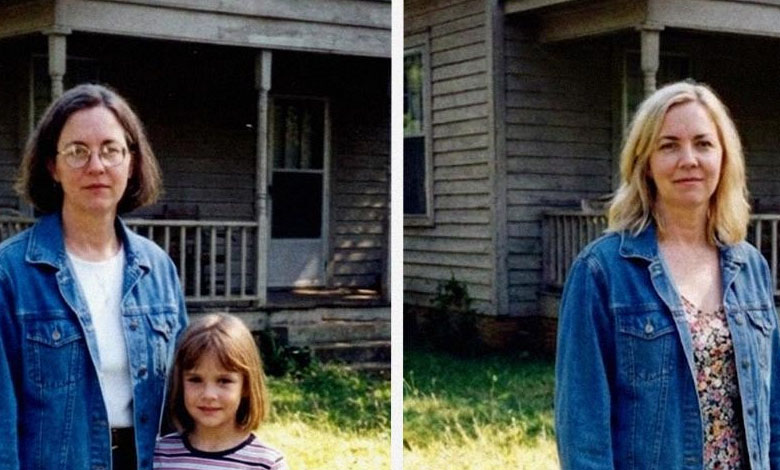
For most of my life, I believed it was just my mother and me against the world.
No father. No extended family that mattered. Just Margaret and Claire.
When I was little and Father’s Day projects filled the classroom, I’d come home quiet. My mother would smooth her skirt, look at me with that unreadable expression, and say, “It’s always been you and me. That’s more than enough.”
I told myself it was.
But love in our house was practical. Structured. Distant.
She made sure I had school supplies, piano lessons, warm coats in winter. What she didn’t give were long hugs or soft reassurances. When I cried, she’d pat my shoulder instead of pulling me close. When I asked to sleep in her bed after a nightmare, she’d pause and say gently, “You’re a big girl, Claire. You’ll be fine.”
And I would walk back to my room and try to believe her.
She came to my college graduation, sat straight-backed in the bleachers, and clapped politely. When I hugged her afterward, she stiffened slightly.
“I’m proud of you.”
It sounded rehearsed.
Still, I never doubted she was my mother.
Until the day her will proved otherwise.
The call came on a Thursday evening.
“Is this Margaret’s daughter, Claire?”
“Yes.”
“This is Harold, your mother’s attorney. I’m very sorry to inform you that she passed away this afternoon after a long illness.”
A long illness.
“She was fine,” I whispered.
“She had been undergoing treatment for over a year.”
Over a year.
She had never said a word.
The funeral was small. Neighbors. A few distant relatives. And Elena, my mother’s housekeeper.
Elena had been around since I was a child. Three days a week at first. Then full-time after I moved away. She cooked, cleaned, handled repairs. She was always there — but never central.
At the reading of the will, I sat numb, expecting grief, not shock.
“The estate is to be transferred in full to Elena.”
I blinked.
“I’m sorry?”
Harold repeated it.
Everything. The house. The savings. Everything.
Outside the office, I confronted Elena.
“I deserve it,” she said quietly, lifting her chin. “I was there every day.”
I left without saying more.
I went back to the house to collect my mother’s belongings.
The rooms felt smaller. Emptier.
In her bedroom, I stripped the bed to pack the linens. When I lifted the mattress slightly, an envelope slid free.
My name was written across it.
Claire.
Inside was a letter.
“My dear,” it began. “There is a secret I tried to protect you from for as long as I could.”
My hands trembled.
She wrote about her infertility. About years of failed treatments. About loneliness so deep it hollowed her out.
Then she wrote about Elena.
Elena had been seventeen when she began working for my mother. At eighteen, she became pregnant. The father wanted nothing to do with the baby. He pressured her to abort.
My mother had been preparing to adopt.
“When I learned of Elena’s situation,” the letter read, “I saw a fragile miracle. I begged her to let me raise you. I promised you would have every opportunity.”
You.
“She agreed on one condition — that her identity remain secret. She believed it would spare you confusion.”
Attached was my original birth certificate.
Under “Mother” was Elena’s name.
The room seemed to tilt.
Suddenly, every distance made sense. Margaret’s careful restraint. Elena’s lingering glances when she thought I wasn’t looking.
“I loved you in the only way I knew how,” the letter continued. “I feared that if I claimed you too tightly while your true mother was near, you would feel torn.”
She left the house to Elena for legal security, knowing Elena was my biological mother.
I folded the letter carefully and walked into the kitchen.
Elena stood at the sink.
“We need to talk.”
She turned, confused.
I held up the envelope.
“I know.”
Her face drained of color.
“Yes,” she whispered when I asked the question outright. “It’s true.”
The words felt surreal.
“So all these years,” I said, my voice shaking, “you just stood there? You never thought to tell me?”
“It wasn’t simple,” she said. “Margaret wanted you so badly. I was terrified. The man who got me pregnant didn’t want you. I thought this was your best chance.”
“Who was he?”
She hesitated.
“He works next door. The gardener. Manuel.”
A memory surfaced instantly — a tall man trimming hedges, watching me ride my bike with a look I could never quite name.
“Elena… why take the house? Why shut me out?”
Her expression shifted.
“Because of him,” she said.
Manuel had confronted her months ago. He noticed the resemblance between us. He threatened to expose everything unless she ensured the house was left to her — so he could benefit.
“He said he’d drag it through court. Through the papers,” she whispered. “I thought if I controlled the house, I could protect you.”
Protect me.
Her phone rang then.
She looked at the screen and flinched.
“It’s him.”
“Answer it,” I said.
She put it on speaker.
“What’s taking so long?” Manuel’s voice barked. “When are you transferring the title?”
I took the phone.
“This is Claire,” I said.
Silence.
“You have no legal claim to this house. If you attempt to blackmail Elena again, I’ll file a police report. Try me.”
A scoff. Then a click.
He disappeared from the neighborhood a week later.
Just like that.
In the quiet that followed, Elena and I sat at the kitchen table.
“I was going to sign the house over and leave,” she admitted. “I thought you’d hate me less if I stayed the villain.”
“I don’t hate you,” I said honestly. “I’m hurt. But I don’t hate you.”
She cried then. Really cried.
For the first time, I saw not the housekeeper, not the quiet woman in the background — but a frightened eighteen-year-old who had given up her child.
“What happens now?” she asked.
“We keep the house,” I said. “Together. We fix the paperwork. I’ll move back for a while. We’ll figure it out.”
She looked stunned.
“You’d do that?”
“Yes.”
There was a pause.
Then she walked around the table and hesitated.
I opened my arms.
She stepped into them carefully, like someone afraid of breaking something fragile.
“I’m sorry,” she whispered.
“I know.”
For the first time in my life, I understood why love in our house had always felt complicated.
It hadn’t been absence.
It had been fear.
And standing there in the kitchen of the house I thought I’d lost, held by the woman who had given me life, I realized something else.
I had never been alone.
I had always had two mothers.
They just never knew how to share me.